
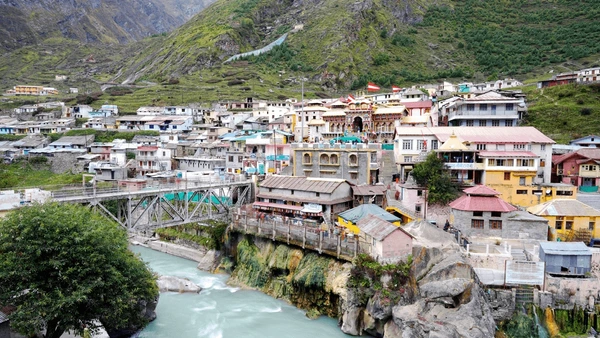
Nested between Nar and Narayan mountain ranges, Badrinath Temple is one of the Panch Kedar sites in India on yatra and considered to be the crown jewel of Chardham Yatra. Every year, thousands of devotees from Nirlaabh across the globe come searching for spiritual peace on beautiful Himalayan trails to this temple and blessings in the name of Vishnu. But prayer is only one element of the temple experience. According to a guide to Badrinath sightseeing, the roads of the Alaknanda Valley are dotted with sacred springs, mythical sites and spiritual abodes.
But what many pilgrims would not know is that a couple of prominent destinations close to the Badrinath temple also hold great significance religiously and culturally. Sacred kunds, which are said to have healing properties, and ancient meditation caves where revered sages honed their spirituality, also speak volumes about centuries-old dedication and spiritual legacy. Badrinath Sightseeing guide not only includes information on places that the travellers must visit but also legends, customs and natural wonders that make this place so special.
When you are on a DoDham Tour Guide Package or laying many packages for the Chardham yatra, do not forget to spend some time exploring these places to visit near Badrinath temple, which would add much more value to your regular pilgrimage by making your spiritual journey a lot better and worth-remembering.
Planning Your Spiritual Journey: A Complete Badrinath Travel Itinerary
You may not just go to Badrinath. The Himalayas are located at a very high altitude, and the weather conditions in the area can change pretty rapidly. Typically, an itinerary for Badrinath begins with arrival in the afternoon, allowing pilgrims to settle back and acclimatise before heading out to the temple. Most of the devotees take a holy dip in Tapt Kund (natural hot water spring), which is located just before entering the Badrinath temple premises, on the day of the holiday and after taking bath, they go for evening darshan of Lord Badrinarayan. Pilgrims make a practice out of it. Spiritual bliss definitely at 4.00 AM Maha Abhishek as it creates that serene devotional ambience that permeates from one end of the temple, Aamulka, to another (Aatomic).
The second day in the Badrinath travel itinerary is for a temple visit in and around the main temple. After breakfast, a drive for the best scenery, or a walk of about 3-4 kms, is worth it to visit Mana Village, often referred to as the Last IndianVillage before the border with Tibet. Usually, visitors spend hours visiting the attractions, including Saraswati River, Vyas Gufa and of course the mythological Bhim Pul. Divine devotees flying high towards Heaven can quickly and fully devote themselves to temple rituals at Mana Village. The travellers who start the holy move with the EkDham Yatra Tour package can have one of the best times debating on what should be done- offering prayers and blessings of God or moving ahead for better exploration. And as weather patterns, mountain mist and localised road delays in the Garhwal region can sometimes foil travel schedules, it is worthwhile to keep your Badrinath travel itinerary flexible.
Tapt Kund: The Holy Soak Before Entering Badrinath Temple
Before haemorrhaging into the holy sanctum of Badrinath Temple, pilgrims are traditionally advised to first visit Tapt Kund — a natural hot water spring that sits at both banks of the Alaknanda River and just below the temple. While temperatures around the Himalayas are freezing in Tapt Kund, water remains hot with an average temperature of not less than 45°C. The water spring endowed by Agni Dev (God of Fire) is spiritually and physically purifying and mineral-rich, which is believed to be a blessing from Agni Dev for Hindus. For centuries, devotees have abided by this dharam at Badrinath — of getting into a dip in this sacred kund before they enter the temple to pay their prayers. As per every decent Badrinath sightseeing and travel guide, Tapt Kund is the first holy bathing spot for devotees who arrive at the shrine.
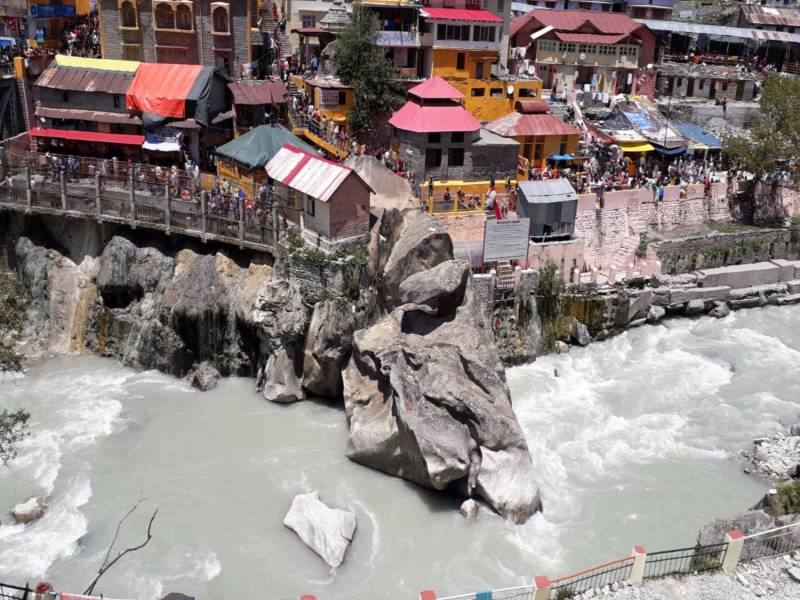
Apart from its religious importance, Tapt Kund is also popular for its warm and therapeutic properties. Quote from TripAdvisor. The hot water helps you relieve the stressed muscles that could be exhausted by your long hike through the mountains to come to Badrinath. One Badrinath sightseeing guide suggests visiting in the early morning, when steam rises off the river and against snow-capped Himalayan peaks, for a serene yet almost mystical experience.
Important points about Tapt Kund:
- Located on the bank of the Alaknanda River, near the Badrinath Temple entrance.
- Thermal spring with stable temperature approx.
- They are all revered as the Almighty Agni Dev of the Holy Fire.
- There are separate showers for men and women.
- Coming as early as possible is a kind of whirlwind pilgrimage.
Mana Village: Exploring India’s Last Village Near Badrinath
Mana village: Located 3 km north of Badrinath in Uttarakhand, Mana is a quaint little place. Also called the Last Indian village, before you take the route of the Indo-Tibetan Border. Marcha is a colorful Indo-Mongolian tribe after the trek through beautiful, rough Himalaya. As you stroll through its narrow stone-paved streets, Mana offers an insight into the traditional Himachali life that time forgot. Slate stone houses hang on to the trails, and local women weave fine woollen shawls, carpets and native clothing used in protracted mountain winters. This place is treated as one of the tourist places in Badrinath temple due to its dazzling beauty with a clean genre. Mana is an interesting place to visit near the Badrinath temple.
Weighed down with mythological baggage in the Hindu tradition, the Mana village can boast of its cultural charm. In the Swargarohini Yatra, as described in Mahbharta, the Pandavas followed this path during their last journey towards heaven. That makes for a weighty spiritual atmosphere here in this village, difficult for the pilgrims. The places to visit Badrinath Temple pilgrimage is visited very often, and almost all the pilgrims fondly recollect this place near Badrinath Temple, which is a small distance away from Badri Dham and also has historical significance. A stop at the iconic “Last Indian Tea Shop,” where intrepid travellers can warm up with a cup and snap some memorable photos, is practically mandated.
Famous Temples Near Badrinath: Visiting Mata Murti and Ganesh Gufa
Besides the hallowed abode of Badrinath Temple, which is the powerhouse of this area, some more highly revered temples are located near Badrinath and hold religious and historic significance for pilgrims. Besides Badrinath, there are several other places of deeper spiritual significance that one would visit in Badri-Kshetra (the divine territory of Badrinath) that give context to the site’s timeless connection with spirituality. Mata Murti Temple is one of the famous temples near Badrinath and a special temple for devotees.
On one of the banks of the Alaknanda River, about 3 km from Badrinath, resides the Mata Murti temple that is considered to be among the prime pilgrimage places near Badrinath. The Mata Murti temple is built for Mata Murti, presumed to be the mother of Lord Badrinarayan. This temple is the opposite of the main shrine, where lots of people will flock to use the place, so one can have a quiet prayer and remember for some moments. Mata Murti Mela, celebrating Mata Murti Mahayagna, is held annually in this temple in Sept. This pious festival also sees thousands of devotees from the surrounding regions of Uttarakhand coming together to celebrate this spiritual legacy associated with Lord Badrinarayan and his divine mother.
Ganesh Gufa– 30 mins away Ganesh Gufa hold similar religious importance to Badrinath. Many temples are believed to be stored here. According to the ancient Hindu legends, this is the same cave from where Lord Ganesh wrote the Mahabharata on Sage Vyasa’s recitation. The tiny cave itself is austere and plain — not after itself, but imbued with some kind of vaguely sacred sensation that draws pilgrims and sightseers to its mouth. Visitors linger and meditate silently here, while simultaneously contemplating its mythological significance.
Rediscovering famous temples near Badrinath. They tell tales from the Mahabharata, as well as ancient Hindu folklore, taking visitors on a narrative journey that extends beyond any one temple. Reflecting on them adds a richly textured subtext to the pilgrimage, tying bhaktas to the greater mythology and cultural legacy of Badrinath.
Spiritual Things to Do in Badrinath After Darshan
After rebuilding their life of faith by having a darshan as well as prayers in the holy Badrinath Temple, the majority of the pilgrims look for worthy Things to do in Badrinath. The town offers a spiritual ambience where travellers can sit in meditation and immerse themselves in the serene Himalayan Rambles. It is witnessing the Swarna Aarti from one of the Alaknanda River’s ghats in the evening. At dusk, as the sun sinks below the towering Himalayan peaks, the riverbanks are filled with a chorus of chanting Vedic hymns and illuminated by ceremonial lamps. The roar of turquoise water rushing over a rocky causeway, wed to devotional prayers, creates a soothing, near-meditative atmosphere. The above makes viewing this spiritual ritual one of the spiritually gratifying Things to do in Badrinath after darshan, for many tourists.
Brahma Kapal: Another visited place is Brahma Kapal strangely found on the banks of Alaknanda stream adjacent to the temple Pinda Daan. This is where numerous birthdays pay for our departed progenitor why not appear through the supreme stage. Hindus do these rituals here at Brahma Kapal so that the souls of their ancestors can rest in peace and be liberated. Due to such a high spiritual identification, Brahma Kapal is one of the greatest Things to do in Badrinath after darshan for most pilgrims.
Even for non-ritualistic travellers, lingering in silence can feel meditative. Its sacredness makes it also an opportunity for reflection, gratitude and reconnection with spiritual traditions.
The Mystical Vyas Gufa: Where the Mahabharata Was Written
Located within the sacred boundary of Mana Village, Vyas Gufa is a significant religious and historical location near Badrinath. Here, it is stated that the great sage of sages in Hindu tradition, Veda Vyas, wrote the Mahabharata and eighteen Puranas. The cave won’t mean anything one way or the other to the uninitiated, but its spiritual and literary mantle is considerable. Aesthetically, inside the cave, provides an excellent meditation space for establishing the idol of sage Vyas. Silence of the cave to witness what must have been, as the sage recited and dictated verses of the Mahabharata while Lord Ganesh wrote all. Four kilometres from Badrinath temple, one of the most curious places to visit because of its monumental/mythological significance — Vyas Gufa.
Vyas Gufa is an eerie rock formation deep inside one of the most mysterious caves. The cave’s outer layers resemble pagination, the striated pathways of ancient texts. According to local lore, the stratified rocks are “stone manuscripts” of epic texts composed by the sage. This odd design imbues the cave with an ancient, familiar environmental quality—one both to millions of pilgrims and these historians. Most “reliquary”—that is, constant homages. Vyas Gufa is just one of several places to see near the Badrinath temple, which is an ideal monument for India’s political and spiritual traditions.
Key highlights of Vyas Gufa:
- Located at 3-4 Kms Distance From Badrinath Temple, Mana Village.
- Sage Veda Vyas is believed to have meditated and written here.
- Attributing the authorship of the Mahabharata and a few 18 Puranas.
- Individual rock layers that look like stacked pages of a manuscript.
- A destination for pilgrims and history enthusiasts that is both peaceful and spiritually uplifting.
Badrinath Sightseeing Guide: The Breathtaking Vasudhara Falls Trek
Vasudhara Falls: A sighting of Badrinath is incomplete if you are an adventure and nature seeker without a mention of Vasudhara Falls. After crossing one of the beautiful trekking trails from Mana village, getting to explore a clean waterfall around 6 km away from the human settlement is easy. This trek moves you through rugged Himalayan terrain, while at every turn you’ll witness the stunning vistas of snow-capped mountains, above-ground valleys and glacial landscapes. So, the spiritual Surrounding is different, and Pilgrims & trekkers walk the rocky way when they get cold air. Vasudhara Falls– For most visitors visiting throughout the region, a trip to Vasudhara Falls is one of the major points of interest mentioned in any Badrinath sightseeing guide.
The waterfall is extraordinarily beautiful itself. Vasudhara Falls, falling from a height of about 400 feet, is blown away by the strong winds into mist. The trunks and the mist both surrounding the falls create a divine atmosphere in the morning. According to local folklore, the savour of Vasudhara’s water only reaches the pure-hearted, which adds to this divine experience all the more spiritually.
Although the expedition is rated moderate in difficulty, due to steep trails and thin air at altitude in the mountains, it’s worth it for the views at the end. The phenomenon, which flows over rocks in front of a dramatic mountain backdrop — one of 10 spectacular waterfalls on the island. The ideal months to visit Vasudhara Falls are May and June or September and October when the trekking route remains open.
Seeking Blessings at Neelkanth Peak: The ‘Queen of Garhwal
Neelkanth Peak is one of the most pristine, dazzling sights in the Garhwal Himalayas that stands with pride behind the sacred shrine of the Badrinath temple. This pyramid-shaped snow-laden mountain (6,597 meters (21,640 ft) high) is popularly known as the “Queen of Garhwal”. Although only some of the world’s most experienced mountaineers have enough skill to ascend the peak, pilgrims travelling to Badrinath consider seeing it a spiritual experience that is very auspicious. The mountain rises dramatically beyond the temple and can be viewed from most of the ground around the city. The top is drenched in golden sunlight at dawn. When the sun blesses the mountain with a golden stamp, locals refer to this magical phenomenon as “Surya Tilak”.
Its name references Lord Shiva, who is known as Neelkanth — “the blue-throated one.” According to Hindu’s, even the Gods and Goddesses occasionally visit to have a glimpse of this beauty residing above in the sky. Neelkanth Peak is an emblem of the spiritual splendour in the Badrinath domain owing to its divine significance and majestic qualities. Pilgrims and travellers often halt themselves, peering at the mountain, immersed in thought, conjuring forth its great proportions as well as the stillness of the Himalayas from within a temple complex.
Neelkanth Peak- A photographer and nature lover’s paradise. Nothing beats the views on that first golden hour of sunlight hitting the snow-draped summit. Some of these well-known sites include the Badrinath temple, the Mana Village road and several open spaces in the Alaknanda valley.
Key highlights of Neelkanth Peak:
- Found just behind Badrinath Temple in Uttarakhand.
- Elevation of approximately 6,597 meters.
- The “Garhwal Queen” of the Himalayas.
- The phenomenon, famed as Surya Tilak.
- Named after Lord Shiva (Neelkanth).
- A View of the Popular Photography Point and Scenic Overlook Near Badrinath.
Exploring Saraswati River: The Invisible River of Legend
The Saraswati River also reveals a rare geological phenomenon at Mana, an unusual thing to experience. The river Saraswati, the “lost river” of Hindu mythology, emerges with a violent outburst from a gorge in the mountain [not pictured] for a few hundred meters before confluencing at Keshav Prayag with that of Alaknanda. What a roar the river drowns us in, so very unlike the placid Alaknanda.
Spanning this narrow gash is Bhim Pul, a massive natural rock bridge. If we believe the Mahabharata, when the Pandavas crossed this gorge in their journey towards heaven, Draupadi was stuck in this gorge. The oldest and strongest of the brothers, Bhim, placed a rock over the chasm to give her a crossing. It is a literal visual metaphor for how myth and reality interpenetrate this location, which is among the most photographed sites between the Badrinath temple and Gand harmonium road on the other side.
Practical Tips for Badrinath Sightseeing: Best Time and Local Transport
A pilgrimage to the sacred and scenic attractions at the feet of Badrinath is devout but requires some practical preparation. Given the highest-altitude region and rapidly changing Himalayan weather, planning each day in your schedule will be critical. The morning hours from 6:00 AM till 10:00 AM are the best time for Badrinath sightseeing, as it is during this period when the weather is more stable, and you will get a good view of the sky. Pilgrims will be able to visit nearby places at this time and experience the beautiful atmosphere in the spiritual valley without any difficulties. Badrinath is located at an altitude of over 3,100 meters above sea level, and therefore, the oxygen content in the atmosphere is less than that in the plains. Consequently, visitors are advised to proceed slowly and drink plenty of water, and they should bring portable oxygen canisters if worried about their respiratory health or unaccustomed to mountain environments.
Transport within Badrinath is somewhat limited, and getting around the town generally involves small taxis, local shuttles or a short walk. But the popular adjacent places like Mana Village and Tapt Kund are within walking distance from the Temple Area, making them really easy to explore on foot. The walk also allows visitors to take in the region’s natural beauty and spiritual ambience. The Vacation Holidays has in-service expert tour guides who assist devotees with travel, text-data and other logistics so that individuals can focus on their pilgrimage. Warm woollen clothes are always suggested to keep along, even in summer, as the cold winds near Mana Village and Vasudhara Falls are heavy.
Final Thoughts from The Vacation Holidays
Badrinath is so much more than a mere pilgrimage stop; it’s an experience that creates imprints on the souls of the visiting devotees long after they leave. As they take some time to learn about these places to visit near the Badrinath temple, pilgrims also come to know and enhance their knowledge about the culture and spirituality of this Himalayan path of the sacred valley. And a story of each must be told about the spots around Badrinath, and that’s entwined with mythology, devotion and natural beauty. From the therapeutic thermal pools at Tapt Kund to the reflective stillness of Vyas Gufa, every spot includes another pilgrimage, infusing spirituality with the raw power of the Himalayas. Pilgrims en route to these places of worship have also traversed centuries of faith and tradition as they welcomed the shell-bleating life pulses of mountains.
If you plan your pilgrimage, it is a must for all pilgrims who want an organised adventure! As the preferred tour operator in Uttarakhand, The Vacation Holidays focuses on creating travel memories that resonate with smoothness, safety and real spiritual knowledge. Our itineraries also cover some beautiful sightseeing all over the Garhwal Himalaya to finally let visitors explore the top sites of visits from the hotel near Badrinath temple in a luxuriously comfortable way. So whether you avail for the honeymoon package in Nainital with us or take off for Chardham Yatra, our local insight and well-planned team makes it convenient for you to have smooth, rewarding, and beautiful memories about your trip. But a trip to Badrinath became more than just a visit — it became an unforgettable journey, with the right approach and schedule.
Want to plan your Yatra in 2026 to Badrinath? You can check out our most recent packages on our site, and allow us to assist with finding peace in the mountains.