
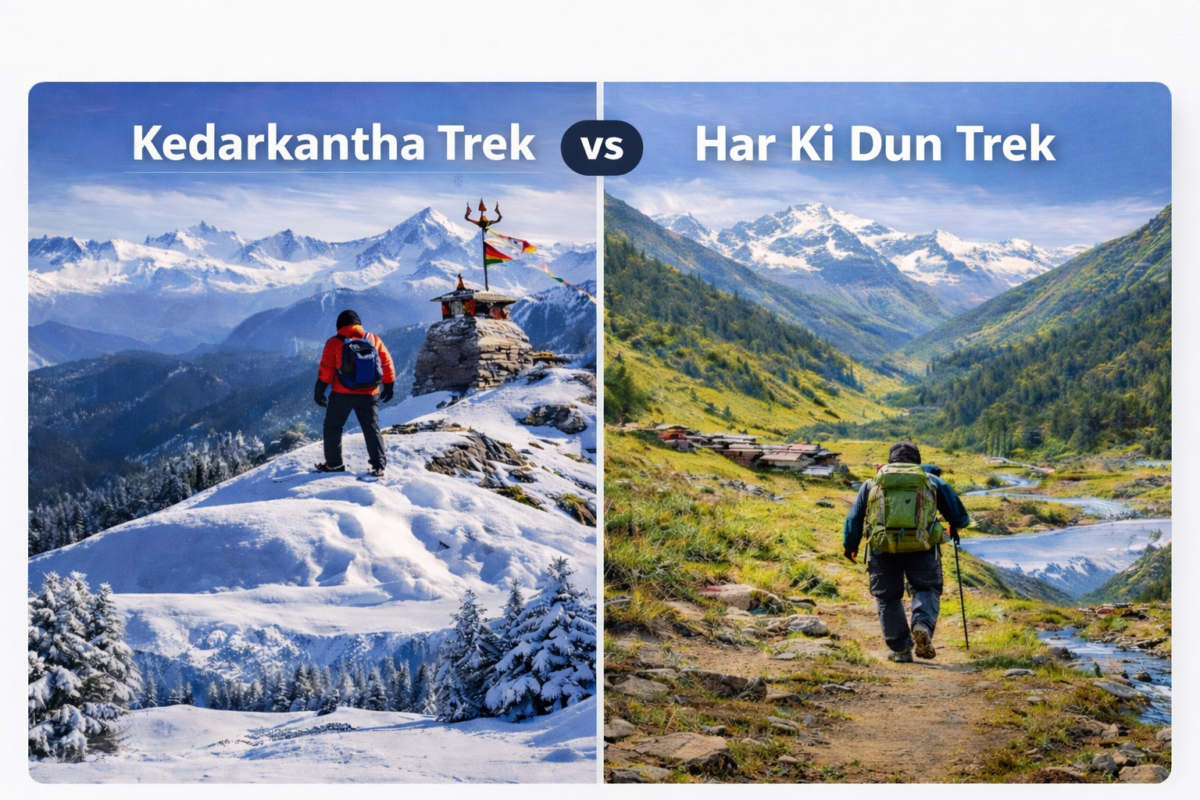
Two of Uttarakhand’s Most Iconic Treks One a quick, snow-locked summit attack. The other a long valley walk steeped in living mythology. If you are comparing Kedarkantha and Har Ki Dun 2026 — this is the one page guide for you.
Each year, thousands of trekkers come to the same question: Kedarkantha or Har Ki Dun? Both are in the Garhwal Himalayas of Uttarakhand, both offer rewards of stunning Himalayan scenery and both can be done by non-expert trekkers. But they are radically different experiences — in terrain, commitment, season, cost and the kind of memory they leave behind.
This reference combines experiences gained from seasons spent on both paths, with updates to match 2026 pass regulations, trail conditions and sustainable trekking practices set in place by state forest authorities. Whether you have 5 days or 10, a tight budget or plenty of cash to burn, a solo trip or a family outing — read on and you’ll know exactly which trek to book.
At a Glance: The Key Differences
| Feature | Kedarkantha Trek |
Har Ki Dun Trek |
| Trek Type | Summit Trek | Valley Trek |
| Max Altitude | 3,800 m (12,500 ft) | 3,566 m (11,700 ft) |
| Duration | 4–6 Days | 6–8 Days |
| Difficulty | Easy to Moderate | Moderate |
| Best Season | Winter (Dec–April) | Apr–Jun, Sep–Nov |
| Snow Experience | Excellent | Limited |
| Cultural Experience | Minimal | Rich Himalayan villages |
| Base Camp | Sankri, Uttarkashi | Sankri / Taluka, Uttarkashi |
| Approximate Cost | ₹8,000–₹14,000 | ₹12,000–₹22,000 |
| Scenery | Snow peaks & summit views | Valleys, rivers, forests |
| Factor | Kedarkantha | Har Ki Dun |
| Summit / High Point | Yes — 3,800 m peak | No summit; valley exploration |
| Snow Experience | Guaranteed Dec–Mar | Possible Oct–Nov, Apr |
| Village / Culture | Minimal (Sankri base) | Rich — Osla, Har Ki Dun hamlets |
| Fitness Required | Moderate; beginner-friendly | Good base fitness needed |
| Permit Required | Yes (Uttarkashi Forest Dept) | Yes (Govind Wildlife Sanctuary) |
| Wildlife | Limited — birds, occasional deer | Rich — snow leopard territory, Himalayan monal |
| Group Size Limits | Up to 25/day (check 2026 regs) | Regulated inside sanctuary |
| Photography | Sunrise panoramas from summit | River, meadow, heritage village shots |
TREK DEEP DIVE
Kedarkantha Trek: Everything You Need to Know
Kedarkantha is, in very simple and sincere words, the most preferred winter trek of India. Nestling in the Govind Pashu Vihar area of Uttarkashi district, it provides first-time trekkers with a real summit experience — all deep snow, forest campsites and breathtaking 360° views of peaks including Swargarohini, Bandarpoonch and Black Peak — but without the logistics of a high-altitude expedition.
Why Kedarkantha Dominates in 2026
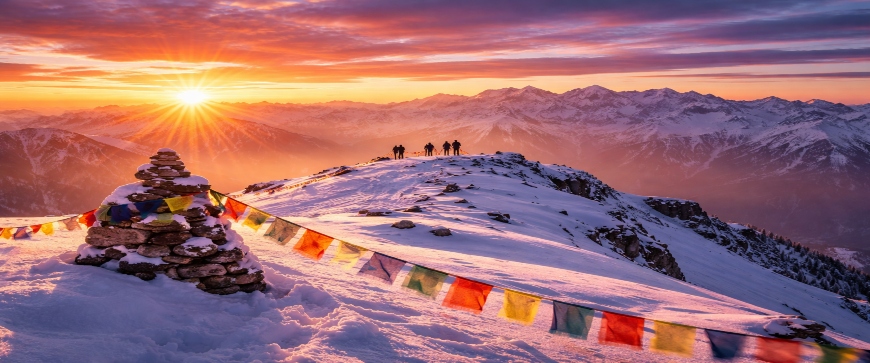
With the rising tide of winter trekking culture in India, the trek has gained immense popularity. This 4–6 day long, low-cost, easy to access from Dehradun and well-charted trek makes it an ideal “first real trek” for both urban Indians and international visitors. In winter, the trail through pine and oak forests filled with 3–6 feet of snow is positively magical.
⚠ 2026 PERMIT UPDATE
Forest department regulations have tightened since 2024. Always book permits in advance via the official Uttarakhand Forest Department portal or through a licensed trekking operator. Spot permits are no longer reliably available at Sankri during peak season (December–February).
Kedarkantha — Day-by-Day Itinerary (5 Days)
Day 1 – Dehradun → Sankri (Base Camp)
Begin with an 8–9 hour scenic drive from Dehradun to Sankri via the Mori road. Sankri sits at an altitude of 1,920 meters and serves as the base camp for the Kedarkantha trek. Spend the evening acclimatizing, checking trekking gear, and completing forest permit formalities. Overnight stay in a guesthouse or camp.
Day 2 – Sankri → Juda Ka Talab
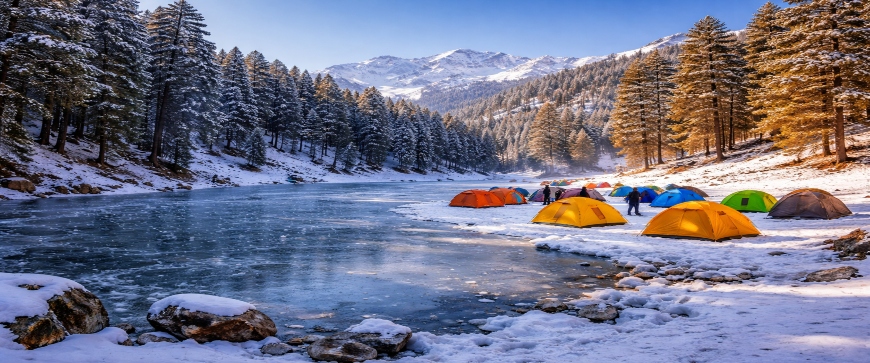
Trek approximately 4 km through dense oak and rhododendron forests. The trail gradually ascends to an altitude of 2,708 meters. Juda Ka Talab, a beautiful alpine lake that often freezes in winter, makes for a stunning campsite surrounded by snow-covered trees.
Day 3 – Juda Ka Talab → Kedarkantha Base Camp
Trek around 4 km to reach Kedarkantha Base Camp at about 3,500 meters. As the forest clears, expansive meadows open up, offering the first clear views of Kedarkantha Peak. Enjoy breathtaking sunset views over the Har Ki Dun range.
Day 4 – Summit Day: Kedarkantha Peak (3,800 m)
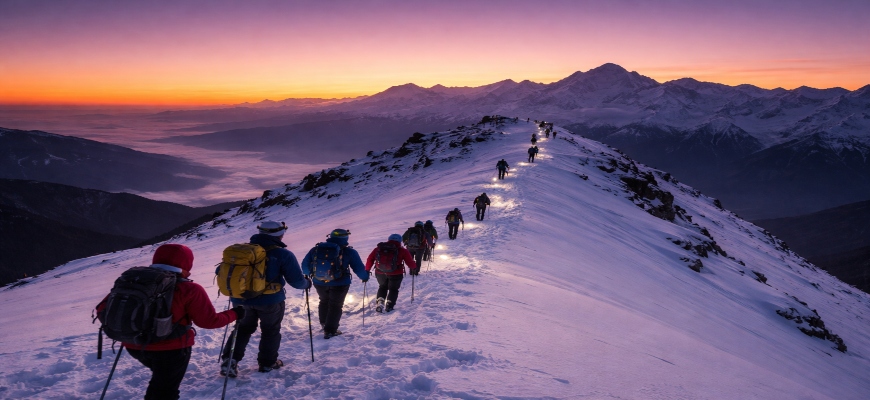
Start early in the morning around 3–4 AM for the summit push. Reach the summit by sunrise to witness a spectacular 360° panorama of the Himalayan peaks. After spending some time at the top, descend back to Sankri via the Hargaon trail or an alternate route. This is a long but highly rewarding day.
Day 5 – Sankri → Dehradun (Drive Back)
If time permits, enjoy a short morning walk around Sankri village before starting the drive back. Depart for Dehradun and reach by evening.
What Makes Kedarkantha Special
— Definitive summit experience — The actual peak crossing is accessible to non-technical trekkers, making it a genuine achievement for beginners.
— Stunning winter campsites — Camping in snowfields surrounded by ancient forests is unlike anything on the summer trail circuit.
— Compact and time-efficient — Ideal for people with limited leave; the trek can be completed in 4 days if pushed.
— Great for solo trekkers — Well-organized operator ecosystem at Sankri; easy to join groups at the base.
— Sunrise from the summit — The pre-dawn summit push rewards trekkers with a golden sunrise over dozens of Himalayan peaks.
Kedarkantha Limitations to Know
— Very crowded during peak season — The trek becomes extremely busy during December–January, and the trail quality can deteriorate near popular campsites.
— Limited cultural experience — The route offers little interaction with village life; the trek is mainly focused on nature and the summit.
— Less wildlife sightings — Compared to treks that pass through wildlife sanctuaries, this route offers fewer opportunities to see animals.
— Less dramatic outside winter — During non-winter months (May–November), the trek loses much of its visual charm; Kedarkantha is truly magical mainly in winter.
TREK DEEP DIVE
A Complete Guide: Har Ki Dun Trek
Har Ki Dun — “Valley of Gods” in the local Garhwali dialect — is one of the most culturally and ecologically diverse treks in all of the Himalayan range. Hidden deep in the Govind Wildlife Sanctuary and National Park, the valley is a hanging valley formation bordered on one side by the soaring Swargarohini peaks and the other by an ancient Tons river drainage.
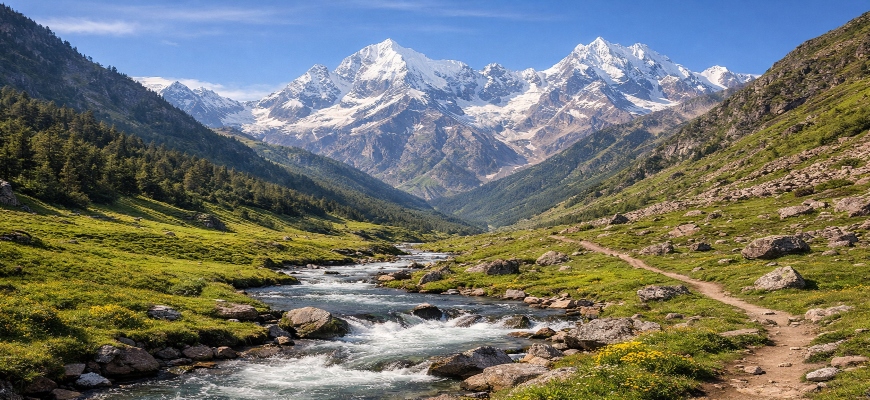
This trek isn’t a summit climb, unlike Kedarkantha. This is about entering a living, breathing landscape where Mahabharat mythology runs parallel to glaciated ridgelines and village folk still perform customs that preceded written history; it’s where the trail weaves past the Supin and Ruinsara rivers through some of the most biodiverse Himalayan wilderness you can walk into without technical gear.
Why Har Ki Dun Deserves More Attention in 2026
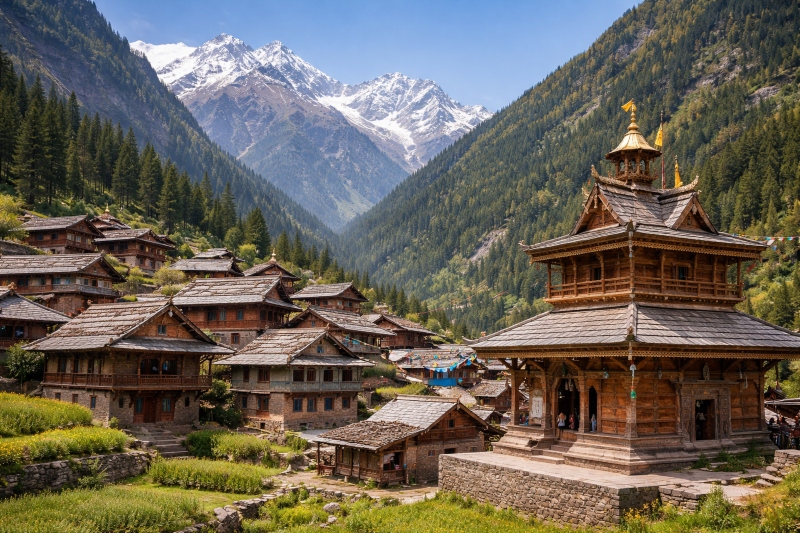
And though Kedarkantha takes the vast majority of novice trekking traffic, seasoned trekkers (and seekers of depth over brevity) have long rated Har Ki Dun as the more transformative experience. The UNESCO-worthy biodiversity of Govind Wildlife Sanctuary, mingled with heritage villages such as Osla and Gangad — where wooden temples and stone houses have graced the valley for centuries — makes this a trek that awakens not only your legs but all senses.
🌿 Responsible Trekking Note
Har Ki Dun falls within a protected sanctuary. As of 2026, all trekkers must carry permits issued by the Govind Wildlife Sanctuary office. Campfire restrictions are strict. Carry all waste out — leave-no-trace principles are enforced and monitored by sanctuary staff on trail.
Har Ki Dun — Day-by-Day Itinerary (8 Days)
Day 1 — Dehradun → Sankri / Taluka
Drive to Taluka (1,900 m) — the actual trek start point, a few km beyond Sankri. Road conditions to Taluka vary by season; jeep recommended beyond Mori.
Day 2 — Taluka → Osla Village
Trek distance: ~13 km. Altitude: ~2,560 m. The trail follows the Supin River through forests of deodar and birch. Osla is a traditional Garhwali village with a famous Duryodhana temple — unique in India.
Day 3 — Osla → Har Ki Dun Valley
Trek distance: ~12 km. Altitude: 3,566 m. The trail opens into sweeping alpine meadows with the first views of Swargarohini I, II, III and Bandarpoonch. Camp on the valley floor.
Day 4 — Har Ki Dun (Exploration Day)
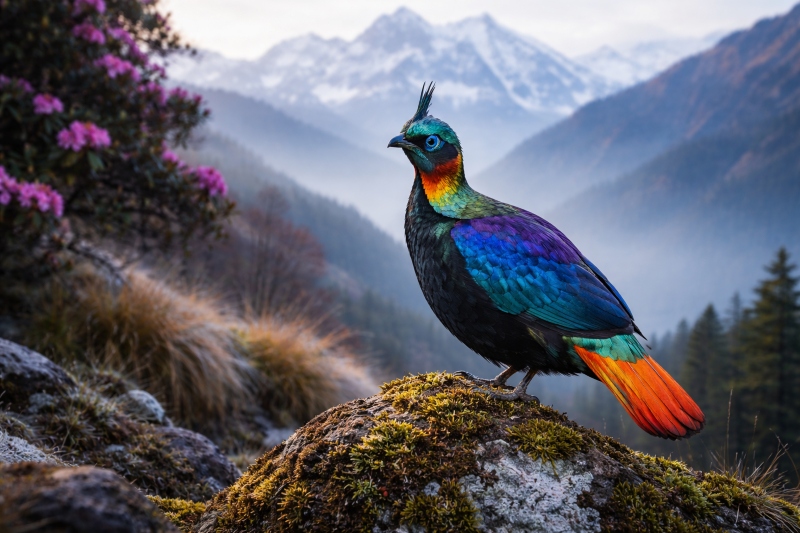
Day hikes to Ruinsara Lake (~3 km one-way) or Maninda Lake. Exceptional birdwatching opportunities including Himalayan Monal and Snow Partridge. Rest and acclimatize at the valley floor.
Day 5 — Optional Extension: Jaundhar Glacier
For fit trekkers, trek towards Jaundhar Glacier (approx. 3,800 m) for spectacular views of ice and high alpine terrain. Return to Har Ki Dun camp by evening.
Day 6 — Har Ki Dun → Osla
Begin the return journey. The descent offers new perspectives of the valley and mountains. An overnight stay in an Osla village homestay is highly recommended.
Day 7 — Osla → Taluka
Final day on the trail. Morning light along the Supin River makes this stretch especially beautiful. Pickup from Taluka for the return drive toward Sankri or Dehradun.
Day 8 — Taluka → Dehradun
Drive back to Dehradun. Optional overnight stop in Purola or Barkot, or visit the hot springs near the Kempty Falls area along the route.
What Makes Har Ki Dun Special
— Cultural immersion — The village of Osla and the Duryodhana temple are unlike anything on the standard trekking circuit; local Garhwali hospitality in homestays is sincere and memorable.
— Biodiversity — Govind Wildlife Sanctuary hosts snow leopards, brown bears, Himalayan tahr and more than 150 bird species, including the magnificent Himalayan Monal (the state bird of Uttarakhand).
— Geological wonder — The formation of a hanging valley is rare; geologically, the Har Ki Dun bowl is a classic U-shaped glacial valley that showcases textbook Himalayan geology.
— More time in the wilderness — Eight days on the trail allow deeper acclimatization, better wildlife sightings, and a more immersive Himalayan trekking experience.
— Multiple extensions — Ruinsara Lake, Maninda Lake, Jaundhar Glacier, and even the longer Borasu Pass crossing (Grade: Difficult) are accessible from the valley, offering experienced trekkers opportunities to explore further.
Must Know Limitations of Har Ki Dun
— More time and higher cost — This trek typically requires at least 7–8 days, making it less suitable for trekkers with limited time.
— Monsoon road access issues — Heavy monsoon rains can damage or wash out the access road to Taluka. In some years, October (post-monsoon) is a safer choice than September.
— No dramatic summit moment — If your goal is to stand on a high peak, this trek may feel less rewarding since it focuses more on valley exploration.
— Variable homestay standards — Homestay quality can vary in remote villages; carrying your own sleeping liner or light sleep system is recommended for comfort and hygiene.
TIMING YOUR TREK
Best Season: When to Go
Kedarkantha — Best Months
Though it is essentially a winter trek, Kedarkantha has become one of the most attractive trekking locations. The prime window is between December and March, where you can expect 3–5 feet of snow on the trail, nighttime temperatures to dip -5°C to -15°C, and summit sunrise at its peak dramatic. A trip in late November or early April can still be beautiful, but snow depth and visual drama are diminished.
— December–January — Most snow, most picturesque, but coldest nights. Best for people who want the complete winter experience.
— February–March — Nice snow with slightly warmer conditions. High season; reserve in advance.
— April–November — Possible, but not recommended; the trail becomes a green meadow without the dramatic winter scenery.
Har Ki Dun — Best Months
Har Ki Dun is a three-season trek which can be done in spring, summer or autumn with each season bringing with it its own character.
— April–June — Spring flowers, snow on higher ridges, moderate temperatures and good visibility. The most popular season, with rhododendrons in full bloom during April.
— September–November — Post-monsoon clarity provides the clearest mountain views. Wildlife becomes more active as winter approaches, and October is often considered the best month.
— July–August — Not recommended. Torrential monsoon rains make trails slushy and dangerous, with a high risk of landslides on the access road.
— December–March — Accessible mainly for experienced winter trekkers with proper equipment; trail conditions inside the sanctuary are largely unmaintained during winter.
💡 2026 SEASON NOTE
Climate variability has pushed snowfall patterns later across the Uttarakhand Himalayas in recent years. For Kedarkantha, January is increasingly more reliable for deep snow than December. For Har Ki Dun, October continues to offer the most stable weather and clearest views.
Fitness & Preparation
Difficulty Level — Who Each Trek Is For
Neither trek is technical — no ropes, harnesses or mountaineering experience necessary. But they require different forms of conditioning and preparation.
Kedarkantha: Effort Profile
Grade of Kedarkantha trek is easy to moderate. The day’s distances are short (3–6 km), the altitude gain is gradual, and the summit push on Day 4 although steep in the last 500 m, is achievable for all with decent aerobic fitness. For most people, walking 5 km on the level three to four times a week in the months preceding the trek is enough preparation.
The effort is not so much physical as it is managing the cold. The sub-zero camp temperatures, how to manage layers and how to stay hydrated in the cold and icy sections of trail on summit day are what most first-timers struggle with — not the cardiovascular requirement.
Har Ki Dun: Effort Profile
Although Har Ki Dun is rated moderate, the relatively long daily distances (10–13 km on some days) and eight-day duration mean cumulative fatigue is the real challenge. The grade is kinder than on Kedarkantha — the valley approach is a walking trail not a climbing, but eight long days of turning your legs over with a load makes for real base fitness.
Recommended fitness: regular 8–10 km walks or hikes with a daypack, three to four times a week for six to eight weeks leading up. Swimming is a good complement to this, as are stair climbing and cycling.
| Choose Kedarkantha If You Are… | Choose Har Ki Dun If You Are… |
| A first-time trekker wanting a genuine summit | An experienced trekker seeking depth over drama |
| Available for only 5–6 days | Available for 8–10 days |
| Planning a winter trip (Dec–Mar) | Interested in culture, wildlife, and Himalayan ecology |
| On a tighter budget | Planning a spring or autumn trip |
| Looking for a solo or small-group trip with easy logistics | Looking for a less crowded sanctuary wilderness experience |
| A photographer chasing sunrise summit panoramas | A wildlife enthusiast or birdwatcher |
| Traveling with a group of mixed fitness levels | Open to extensions like Ruinsara Lake or Jaundhar Glacier |
Practical Advice
Essential Tips for Both Treks in 2026
Gear Essentials
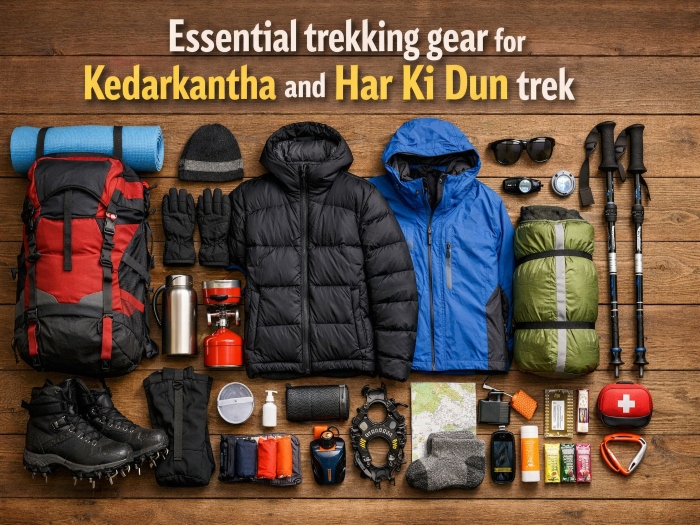
— Layering system — Moisture-wicking base layer, insulating mid-layer, and a windproof outer shell. Non-negotiable for both treks in their respective seasons.
— Trekking poles — Critical for Kedarkantha’s icy descent; helpful on Har Ki Dun’s longer days. Rent at Sankri if you don’t own them.
— Waterproof boots — Ankle-height at minimum. Kedarkantha in winter demands gaiters; Har Ki Dun in spring/autumn does not.
— Headlamp with spare batteries — Summit day on Kedarkantha starts in darkness; batteries lose charge rapidly in cold.
— Down sleeping bag (rated -10°C) — Required for Kedarkantha in winter. A -5°C bag is sufficient for Har Ki Dun in spring.
Logistics to Sort in Advance
— Book permits online via Uttarakhand Forest Department at least 2–3 weeks ahead during peak season.
— Confirm road conditions to Sankri / Taluka — NH-707 passes through Mori and can be blocked by landslides in post-monsoon season.
— Carry cash — ATMs exist in Mori and Purola but are unreliable; no payment infrastructure in the mountains.
— Mobile connectivity ends beyond Sankri on both treks. Download offline maps (MapMyIndia or Gaia GPS) before departure.
— Travel insurance with altitude evacuation cover is strongly recommended for both treks.
Responsible Trekking in 2026
Both regions face increasing environmental pressure from trekking tourism. The Uttarakhand government has implemented strict waste management rules, campfire restrictions, and trail capacity limits. Trekkers are expected to carry all non-biodegradable waste back to base. Choose operators who adhere to the Trekking Operators Association of India (TOAI) green trekking standards and who pay fair wages to local guides and porters.
FREQUENTLY ASKED QUESTIONS
FAQs: Kedarkantha vs Har Ki Dun
Is Kedarkantha Trek suitable for beginners?
Yes — Kedarkantha is one of the most beginner-friendly high-altitude treks in India.
The trail is well-marked, distances are manageable, and operators in Sankri are experienced
at guiding first-time trekkers. Basic fitness such as walking 5 km regularly is usually sufficient.
The main challenge is managing cold weather rather than physical difficulty.
Which trek is better for photography?
Both treks offer different photographic opportunities. Kedarkantha is ideal for dramatic
winter landscapes such as snowfields, summit sunrise views, frozen lakes, and clear
sky-against-snow scenery. Har Ki Dun is better for diverse photography including village
architecture, river valleys, wildlife, wildflowers, and softer mountain lighting.
Landscape photographers often prefer Kedarkantha, while documentary and nature
photographers may prefer Har Ki Dun.
Can you do both Kedarkantha and Har Ki Dun in one trip?
Technically yes, since both treks share Sankri as the base village. However, they are not
usually done back-to-back because their best trekking seasons are different. Kedarkantha
is most popular in winter (December–March), while Har Ki Dun is best during spring
(April–June) and autumn (September–November). A practical plan is to do Kedarkantha
in winter and return later in the year for Har Ki Dun.
What is the best month for Kedarkantha Trek in 2026?
January and February are the most reliable months for deep snow and clear skies.
December can also be good if snowfall begins early, though visibility may vary.
March offers slightly warmer weather with remaining snow, though melting may start
on sun-exposed slopes. For the best winter trekking experience, late January to
mid-February 2026 is often recommended.
What is the best month for Har Ki Dun Trek in 2026?
October is widely considered the best month because post-monsoon skies are very clear
and the valley appears golden before winter begins. The second-best time is late April
to May when rhododendron flowers bloom and snow remains on higher ridges.
July and August should generally be avoided due to heavy monsoon rains.
Is altitude sickness a concern on either trek?
Both treks reach altitudes where mild Acute Mountain Sickness (AMS) can occur.
Kedarkantha summit is around 3,800 meters and Har Ki Dun valley reaches about
3,566 meters. The risk is manageable with proper acclimatization, staying hydrated,
eating well, and avoiding rapid ascent. If symptoms worsen, immediate descent
is recommended.
Is a guide mandatory for these treks?
For Har Ki Dun, a licensed guide is required because the trek passes through
Govind Wildlife Sanctuary. For Kedarkantha, a guide is not legally mandatory,
but it is strongly recommended, especially during winter when snow can make
trails difficult to navigate. Hiring local guides from Sankri also supports
the local community.
Which trek is more family-friendly?
Kedarkantha is generally considered more family-friendly because it is shorter
in duration. However, it may not be suitable for children under 10 due to very
cold temperatures and the demanding summit day. Har Ki Dun has a gentler trail
but requires more trekking days, which can be challenging for families.
Both treks are best suited for teenagers and adults with good fitness.
How do I get to Sankri from Dehradun?
The distance from Dehradun to Sankri is about 200 km and typically takes
8–9 hours by road. Shared taxis from Dehradun, Haridwar, or Rishikesh usually
cost around ₹800–₹1,200 per seat, while private cabs may cost ₹4,000–₹6,000.
The route passes through Mori and the Tons Valley along NH-707.
Many trekking companies also provide pickup from Dehradun as part of
their trek packages.